Showing posts with label Norman Geisler. Show all posts

Wednesday, November 29, 2006

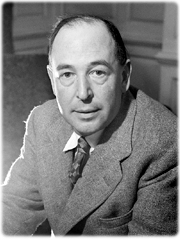
The Testimony of C.S. Lewis


I love a good testimony. I love hearing how someone can to know Christ. One beauty of having brothers and sisters in Christ is that we all have a common thread in some type of testimony - the realization that Christ is who the Bible claims He is and our (sometimes begrudging) acceptance of this fact. Many people are familiar with Oxford and Cambridge scholar C.S. Lewis. However most are unfamiliar with his testimony; his story of how he went from atheism to theism:

"Early in 1926 the hardest boiled of all atheists I ever knew sat in my room on the other side of the of the fire and remarked that the evidence for the historicity of the Gospels was really surprisingly good...'It almost looks as if it had really happened once.' To understand the shattering impact of it (his remark), you would need to know the man (who has certainly never since shown any interest in Christianity). If he, the cynic of cynics, the toughest of the toughs, were not - as I would have put it - "safe," where could I turn? The odd thing was that before God closed in on me, I was in fact offered what now appears a moment of wholly free choice...I could open the door of keep it shut...The choice appeared to be momentous but it was also strangely unemotional. I was moved by no desires or fears. In a sense I was not moved by anything. I chose to open, to unbuckle, to loosen the rein." (C.S. Lewis, Surprised by Joy, New York: Harcourt Brace & Co., 1955, 223-224)

The thing that stands the most to me is the fact that Lewis did not have a highly emotional or passionate moment of conversion. His conversion started when he came to intellectually honest terms of who Jesus was and is.

As Norman Geisler states, "Jesus was especially concerned about bringing His contemporaries to an accurate conception of Himself." (Unshakable Foundations, 282).

Praise God that Lewis responded to the Call - all Christians everywhere have been blessed by his spiritual gifts.


Monday, November 13, 2006

The Problem of Answering the Problem of Evil


In Norman Geisler's work, Unshakable Foundations, he addresses the topic of evil. He notes that Pantheism denies the existence of evil and calls it an illusion but it affirms the real existence of God. Atheism takes the opposite approach and denies the real existence of God, but affirms the real existence of evil. Theism, however, affirms both God and evil so it is the only belief system of the three that must answer the question, "Why is there evil in the world?" He says:


"Atheists (and naturalists) must also explain why evil exists and why they consider it a problem that needs to be addressed. The very fact that evil is troubling to atheists or naturalists logically leads to a standard of good or justice beyond the world."


Geisler then quotes C.S. Lewis, the former atheist-turned-believer:


"My argument against God was that the universe seemed so cruel and unjust. But how had I got this idea of just and unjust? A man does not call a line crooked unless he has some idea of a straight line. What was I comparing this universe with when I called it unjust?"


Geisler adds:


"Imagine once more a universe with no light (no ultimate standard of what is good or evil) and creatures without eyes (no inherent concept of what is good or evil); in this theoretical atheistic reality, the concept of darkness (evil or injustice) is ultimately meaningless. If, as atheists suggest, evil is ultimately meaningless, then what is the problem? If we are merely part of a blind molecular process, how is it that atheists can rise above that process and say that some aspects of it are evil and some are good? Atoms are simpy atoms; there are no evil atoms in the universe. Therefore, atheism cannot logically offer a definition of evil without appealing to an ultimate standard of good. If atheists try to do so, they end up affirming the very existence of that which they claim does not exist - the ultimate good (God)."